


 |
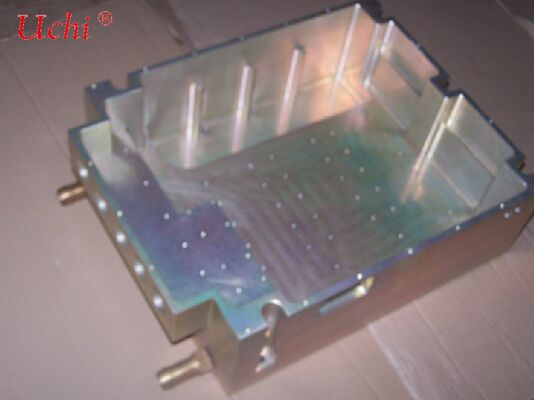
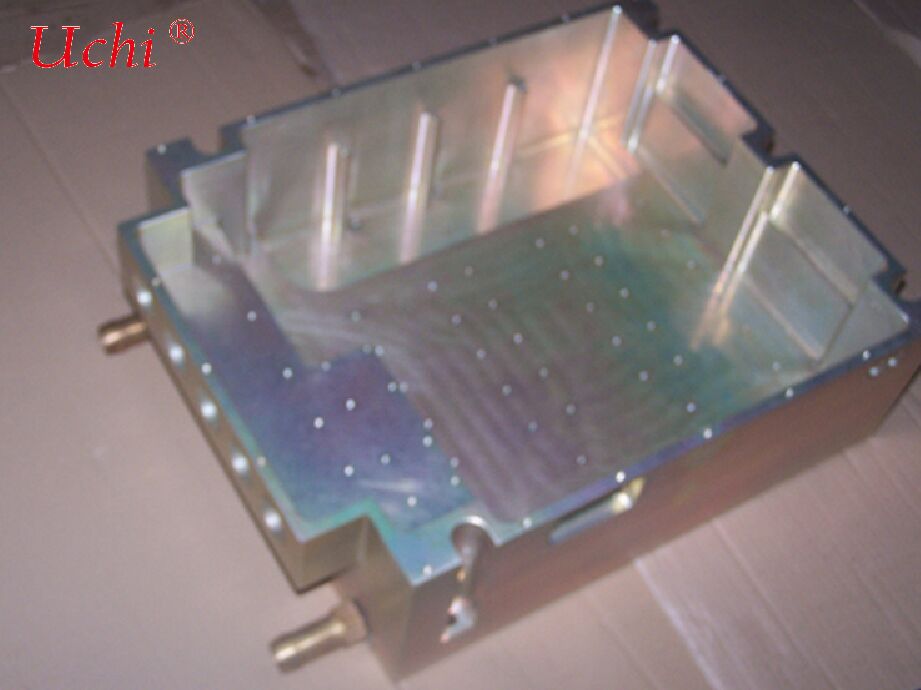
Automotive Water Cooling Plate /Vehicle Liquid Cooling Plate
Product Details:
| Place of Origin: | Dongguan,Guangdong,China |
| Brand Name: | Uchi |
| Certification: | SMC |
| Model Number: | Heat Sink |
Payment & Shipping Terms:
| Minimum Order Quantity: | 100pcs |
|---|---|
| Price: | 1300-1500 dollars |
| Delivery Time: | not limited |
| Payment Terms: | T/T,paypal, Western Union, |
| Supply Ability: | 50000000pcs per Month |
|
Detail Information |
|||
| Thermalconductivity: | High Thermal Conductivity Material (>200 W/m·K For Copper) | Shape: | Square |
|---|---|---|---|
| Surface Finish: | Mill Finish Or Anodization | Packing: | Customers'requirements |
| Deep Process: | CNC Machining | Power: | 400W |
| Feature: | Competitive Costs And Efficient Cooling | Extra Process: | CNC Machining |
| Grade: | Copper | Article No: | Liquid Cooling Plate 14 |
| Application: | RGB Laser Light Source | Customizablefeatures: | Channel Design, Size, And Port Locations |
| Highlight: | automotive liquid cooling plate,vehicle water cooling plate,liquid cooling plate with warranty |
||
Product Description
Automotive Cavity-Type Liquid Cooling Plate
Core Component of New Energy Vehicle Thermal Management, Enabling Safety, High Efficiency and Long Range
I. Product Overview
Automotive cavity-type liquid cooling plate is a core supporting component in the thermal management system of new energy vehicles. It adopts an integrated sealed cavity structure with built-in flow channels, and efficiently regulates the temperature of core components such as battery packs, motors and electronic controls through coolant circulation.
Different from the traditional "milled groove + cover plate" structure, this product combines high heat dissipation efficiency, structural stability and lightweight advantages. It is a key solution to ensure the safe operation of new energy vehicles under all working conditions, extend cruising range and prolong the service life of core components. It is widely applicable to passenger vehicles, commercial vehicles, energy storage systems and special vehicles.
II. Core Selling Points (Concise Version)
-
Efficient temperature control, free of thermal runawayIntegrated cavity with dense flow channels improves heat exchange efficiency by 20%–40% compared with traditional cooling plates. Battery pack temperature difference ≤3℃, suitable for 4C–6C ultra-fast charging, avoiding high-temperature power limitation.
-
Integrated structure, lightweight and cost-effectiveDual functions of heat dissipation and load bearing; can be used as a load-bearing tray for battery packs, reducing weight by 10%–15%. Aluminum alloy is over 40% lighter than copper cooling plates, cutting down parts and assembly costs.
-
Automotive-grade quality, lifelong reliabilityVacuum brazing / FSW solid-state welding ensures zero leakage. Salt spray resistant and corrosion resistant, adaptable to a wide temperature range (-40℃ to 120℃), service life ≥10 years. Passed automotive-grade vibration and impact tests.
-
Flexible customization, full-scenario adaptabilityCustomizable flow channels (serpentine / parallel) and dimensions, compatible with CTC / CTB integrated solutions. Covers models from A00-class to heavy-duty commercial vehicles, with optional integrated temperature control sensors.
-
Controllable mass production, cost-efficient full life cycleMass production yield ≥98%, cost over 30% lower than microchannel cooling plates. Extends battery life by over 20% and reduces full life cycle TCO by over 15%.
III. Core Technical Parameters (Automotive-Grade Standard)
| Item | Typical Value | Automotive-Grade Description |
|---|---|---|
| Material | 6061 aluminum alloy / brazed composite aluminum | Thermal conductivity 200–220 W/m·K, balancing lightweight and thermal performance |
| Cavity Thickness | 3–8 mm | Balances structural strength and vehicle lightweight requirements |
| Flow Channel Specs | Inner diameter 1–5 mm, serpentine / parallel multi-branch | Pressure drop ≤0.3 MPa @ 3–5 L/min, matching vehicle thermal management flow |
| Operating Pressure | 0.5–1.2 MPa | Passed automotive-grade vibration (20g) and impact (50g) tests |
| Operating Temperature | -40℃ – 120℃ | Adapts to extreme cold and hot climates, no freezing blockage or deformation |
| Flatness | ≤0.05 mm / 100 mm | Ensures tight attachment to heat sources without heat transfer gaps |
| Sealing Performance | Helium leak rate ≤1×10⁻⁹ mbar·L/s | Lifelong leak-free, passed 1000-hour salt spray test |
| Heat Dissipation Capacity | 5–20 kW per unit | Suitable for 100–300 kWh battery packs, meeting various power demands |
IV. Typical Application Scenarios
- New energy passenger vehicles: Bottom cooling for battery packs of BEV / PHEV models, compatible with CTC / CTB integrated body design, improving space utilization and cruising range.
- Commercial vehicles / heavy trucks: Three-in-one thermal management for power batteries, motors and electronic controls, supporting high-power fast charging and adapting to complex road conditions and high-load operation.
- Energy storage systems: Temperature control for battery packs in industrial and commercial energy storage containers, supporting high-power charging and discharging, ensuring safe and stable operation.
- Special vehicles: Battery cooling for construction machinery and logistics vehicles, adapting to harsh working conditions and improving component reliability and service life.
V. Selection and Installation Guidelines
- Power matching: 100 kWh battery packs use 10–15 kW cavity cooling plates; 200 kWh and above use 15–20 kW units, matching different cruising range models.
- Flow channel selection: Parallel multi-branch flow channels preferred for fast-charging models (low pressure drop, high flow compatible); serpentine flow channels for long-range models (high heat exchange, more uniform temperature control).
- Installation requirements: Ensure cooling plate flatness ≤0.05 mm. Attach with thermal grease or phase change materials, fasten bolts evenly to avoid deformation caused by local stress.
- Medium requirements: Use 50% ethylene glycol + 50% deionized water (conductivity <1 μS/cm). Regular replacement every 12 months is recommended to prevent scaling from impairing heat dissipation.
Want to Know more details about this product
